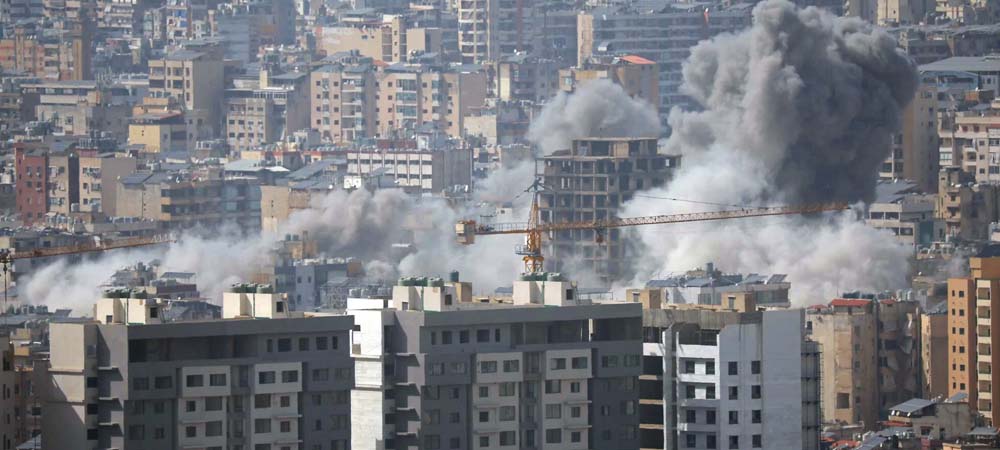
- An invasion of Southern Lebanon from Israel has caused 1.2 million people to be displaced.
- A similar situation occurred in 2022 from Russia, which caused sportsbooks to suspend all betting action related to the country.
BEIRUT – As violence continues across the Middle East, it’s time to question whether gaming regulators should intervene and suspend betting markets tied to Israel.
Reminiscent of the market restrictions placed on Russian teams and events following the Russian invasion of Ukraine in 2022, the question is simple: Should sportsbooks pull Israeli-related betting lines in response to persistent conflict, repeated ceasefire violations, and mounting humanitarian concerns?
On Tuesday, reports indicated that a ceasefire agreement was reached between the United States (plus its allies) and Iran. On Wednesday, the agreement was undermined almost immediately.
Violations of ceasefire have been reported at few places across the conflict zone which undermine the spirit of peace process. I earnestly and sincerely urge all parties to exercise restraint and respect the ceasefire for two weeks, as agreed upon, so that diplomacy can take a…— Shehbaz Sharif (@CMShehbaz) April 8, 2026
According to statements from Reuters, strikes from Israel in Lebanon caused the deadliest day of the war.
These conditions once drove legal online sportsbooks to reconsider offering markets tied to war-affected regions.
Comparisons to Russia and Ukraine
In 2022, many sportsbooks and state regulators moved to remove or suspend betting markets involving Russian teams, athletes, and events after Russia’s full-scale invasion of Ukraine. While this came by way of government sanctions, that response was driven by compliance risks.
In short, it’s about consistency. Either conflict of this scale affects legal sports betting, or it doesn’t.
Many look to the obvious: unpredictable schedules and data feed issues. But they extend into other areas as well. Cancellations of matches and live data feeds become unreliable.
Why A Ban Hasn’t Happened
Despite the debate, several counterarguments explain why regulators have stopped short of market suspension.
- Lack of Sanctions: Unlike Russia, Israel is not subject to broad economic sanctions from the U.S.
- Regulatory Silence: Both state and federal gaming authorities refrain from changes based on politics.
- Interruption: Because the invasion is not within their border, their sports scheduled haven’t been affected.
So, what would it take for sportsbooks to ban Israeli markets?
Formal sanctions are the easy answers. But last year, regulators in Massachusetts even went as far as voting 5-0 to allow sportsbooks to void wagers after the conclusion of an event if a player promoted their country.
A debate should be present as violence continues in the region at a minimum. For now, however, the mechanics of the Russia-Ukraine betting bans aren’t in place.