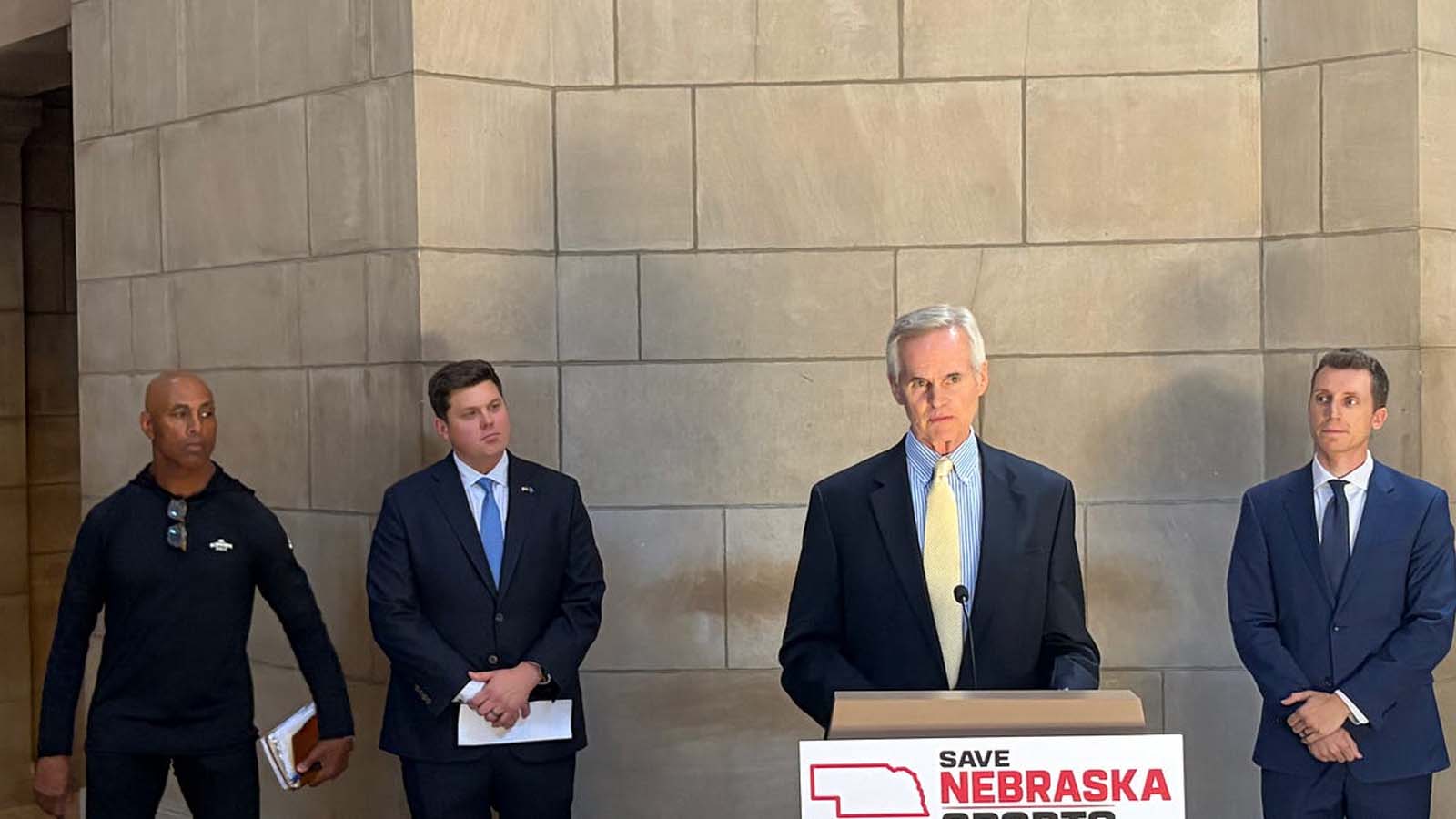
- State Auditor Mike Foley and Treasurer Joey Spellerberg launched the Save Nebraska Sports coalition Sept. 10 at the Capitol.
- Nebraska’s Secretary of State certified both measures for the November ballot Aug. 21 after each drew enough valid signatures.
- A study the measures’ backers commissioned projects about $61 million in property-tax relief over five years.
- Voters decide the constitutional amendment and its companion regulatory measure on the Nov. 3 general election ballot.
LINCOLN, Neb. – Nebraska State Auditor Mike Foley and State Treasurer Joey Spellerberg joined a new coalition opposing the Nebraska sports betting ballot measures at a Sept. 10 Capitol news conference, arguing the property-tax relief the measures promise is a fraction of what the industry stands to keep.
A Coalition Built Around The State’s Own Money Watchdogs
Foley and Spellerberg were joined at the Capitol by Nebraska assistant football coach Ron Brown and Nebraska Family Alliance Executive Director Nate Grasz. Grasz read a written statement opposing the measures from former Husker coach Tom Osborne. The dispute marks a new front in the push to bring legal sports betting to phones in Nebraska, where voters last expanded gambling by approving racinos in 2020.
Brown said he views gambling and online sports betting the way he viewed what “the cat dragged in” as a boy, telling the crowd: “The bloody rats, to me, in this issue, are the consequences of gambling and online sports betting. The sharp claws of these endeavors have sadly dragged in the filth and disease of greed.”
Foley focused on the money. “As the state auditor, I feel an obligation to inform the citizens — you are being scammed,” he said, calling the property-tax pitch a “false promise” because the revenue it generates would be “pennies” next to what flows to FanDuel and DraftKings, both based outside Nebraska.
DraftKings and FanDuel, the operators funding Nebraska’s online sports betting initiative, financed nearly all of the petition drive by Tax Relief Nebraska, the committee behind both measures, each putting in $1.1 million last spring.
What The $61 Million Promise Actually Buys
The dollar figure the campaign cites traces to an Eilers & Krejcik Gaming analysis paid for by Tax Relief Nebraska, which projected just under $87 million in new state tax revenue over five years. About $61 million of that, 70%, would flow to property-tax credits under the formula voters set for casino gambling in 2020.
When the study landed in April, state Sen. Brad von Gillern put that sum at roughly 1% of what Nebraska’s property-tax credit program already distributes in a year, a scale close to the “pennies” comparison Foley drew at the Capitol.
Two Measures, One November Ballot
The certification the Nebraska Secretary of State’s office issued Aug. 21 covered two separate petitions. County officials verified at least 138,473 signatures for the Online Sports Wagering Authorization Constitutional Amendment, which had to draw 10% of registered voters statewide plus 5% in a minimum of 38 counties; it hit that 5% mark in 64. The companion Online Sports Wagering Regulation Initiative, held to a 7% statewide bar and the same county spread, was verified at 96,918 signatures or more, with 55 counties past the 5% line.
The constitutional measure would build on the racino language voters wrote into the state constitution in 2020, opening online wagering through the licensed racetracks in Lincoln, Omaha, Grand Island, Columbus, South Sioux City and Ogallala. The regulatory measure requires wagering servers to sit inside Nebraska and caps each site at two betting platforms, a ceiling of 12 statewide if every site fills its slots. The Nebraska Racing and Gaming Commission would have until June 1, 2027, to write the rules if voters approve.
Nebraska sports betting has stayed limited to in-person wagering at the state’s licensed racinos since the first retail sportsbook opened in 2023. Voters decide whether that changes on Nov. 3.
