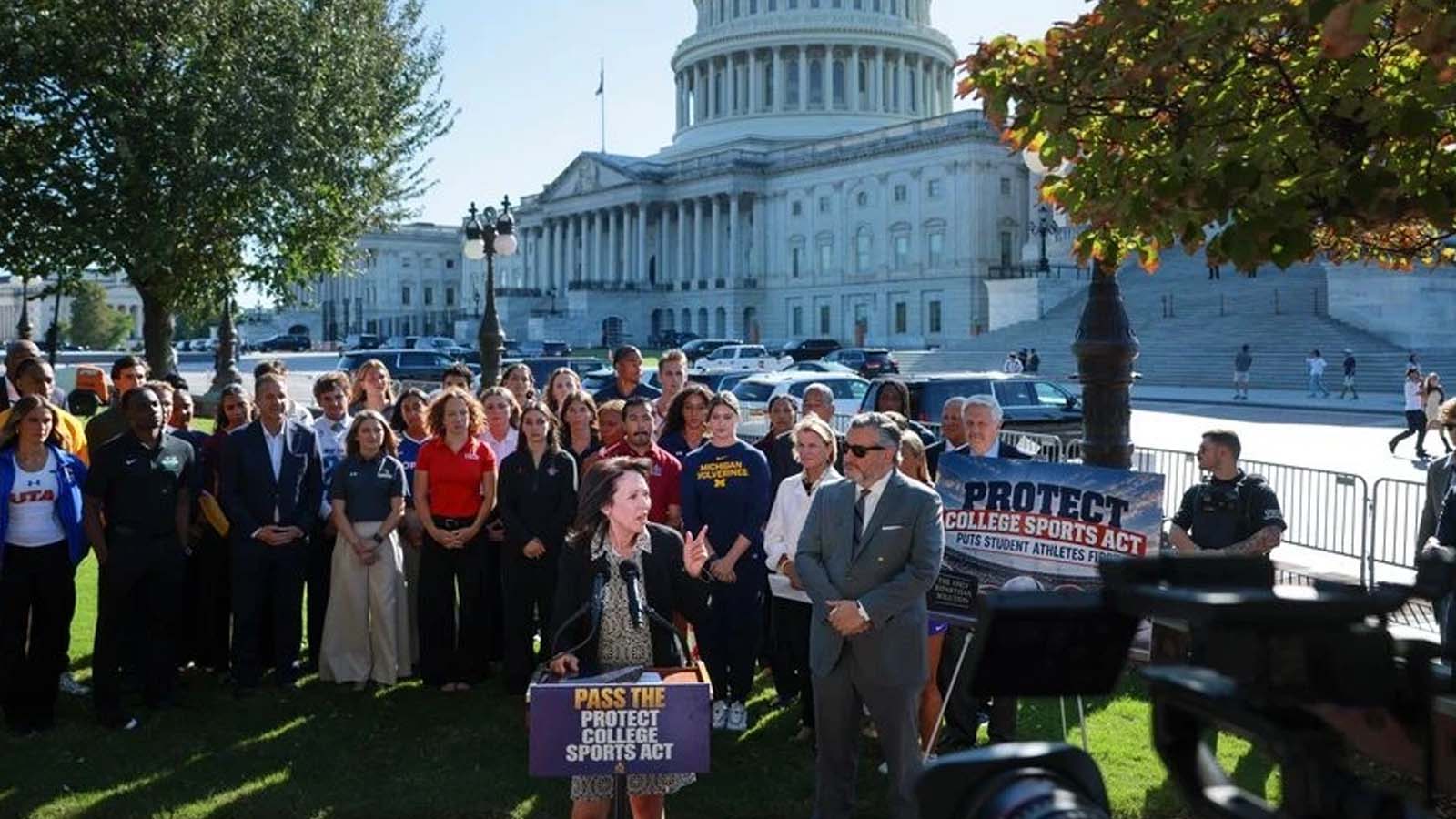
- The Senate passed the Protect College Sports Act 77-22 on Sept. 28, sending it to a House that returns Nov. 9.
- Section 113 lets athletic associations and conferences restrict eligibility for athletes who took part in sports wagering or sports-related event contracts.
- Section 123 applies that clause to lawsuits pending on the date of enactment, unlike most of the bill.
- Athletes may transfer once without penalty and get a maximum of five calendar years of eligibility.
WASHINGTON – The Senate passed the Protect College Sports Act 77-22 on Monday night. The bill, now headed to the House, lets the NCAA and conferences restrict the eligibility of athletes who take part in sports wagering or sports-related event contracts.
What The Wagering Clause Says
Sens. Ted Cruz, R-Texas, and Maria Cantwell, D-Wash., wrote S. 4668. Cruz chairs the Senate Commerce Committee and Cantwell is its top Democrat. The vote came with one senator not voting, according to the Senate roll call, which logged the result at 9:42 p.m.
Section 113(c) of the engrossed text says an intercollegiate athletic association or a conference “may restrict” the eligibility of a student athlete who “participated in sports wagering activities or sports-related event contracts.” The same subsection covers athletes who used an illegal or performance-enhancing drug. The wording is permissive, so nothing in it requires the NCAA or a conference to act.
The text does not name prediction markets Kalshi or Polymarket and does not define “sports-related event contracts.” Senate Commerce Committee Democrats said in an Aug. 5 summary of the updated bill that the language clarifies that athletes who bet on platforms such as Polymarket and Kalshi may have their eligibility restricted. Under that description, athletes who use prediction market apps would carry the same eligibility exposure as those who bet at a sportsbook.
The NCAA’s own rules already ban betting on sports in which it sponsors a championship, and Division I schools voted in November 2025 to rescind a change that would have allowed betting on professional sports, the NCAA said. The association also banned six players over betting that month. What the bill adds is federal backing for those penalties.
Section 123 Reaches Pending Lawsuits
Most of the act does not reach cases begun before it takes effect, according to Section 123(b). Section 123(a) makes the wagering clause the exception, applying it to any action or proceeding pending on or commenced after enactment. The text does not identify which cases that covers. The clause would apply to an existing challenge to a betting-related eligibility penalty even if the suit was filed before the bill became law.
Section 118 makes it lawful under antitrust law for associations, conferences and schools to enforce Section 113 and to restrict the eligibility of any athlete who is ineligible under it. That puts wagering-based penalties behind the same exemption as the transfer and eligibility limits.
Player Props Stay With The States
The bill does not mention player props and sets no rules for operators of legal sports betting. Ohio, Maryland and Louisiana banned college player props in 2024 after the NCAA asked states to act, and the Senate text does not change those bans.
The effect on props would be indirect: federal grounds for lost eligibility strengthen the NCAA’s statehouse case against college prop markets, the main way the act impacts college betting.
Transfer Limits, Payment Caps And A Five-Year Clock
Section 112 lets an athlete move between four-year schools once without losing or delaying eligibility. A second transfer costs eligibility during the first academic year after the move, unless the athlete’s sport was discontinued, the head coach left, the athlete was sexually assaulted or harassed by someone tied to the school, or the athlete is pursuing a graduate degree.
Section 113(b) caps eligibility at five calendar years, counted from the earlier of the academic year after the athlete’s 19th birthday or full-time enrollment. Pregnancy, religious missions and active-duty military service pause the clock.
The act also ties school payments to athletes to the June 2025 House settlement’s benefits pool limit. It allows schools to exceed that limit by up to $22.5 million a year through a retention fund, and it shields the NCAA, conferences and schools from antitrust claims when they enforce its rules.
For those pricing college football and basketball futures, fewer penalty-free moves would make a program’s returning roster a steadier input from year to year. The head-coach exception leaves a coaching change as one way for players to leave without penalty.
The House Has Until Jan. 3
The White House said in an Aug. 6 Statement of Administration Policy that it supports passage and that the president’s advisers would recommend he sign the bill. The House is not scheduled to return until Nov. 9, and Speaker Mike Johnson expects the bill will not be considered until the lame-duck session.
Some House Republicans want changes such as a ban on classifying athletes as employees, according to the same report. Section 122 of the Senate text is neutral on employee status. Any amended version would return to the Senate, and the process would restart if Congress does not finish before the new Congress convenes Jan. 3.
