- Insider-trading statutes now on the books already govern event contracts, the memo concludes, including STOCK Act sections aimed at federal workers, lawmakers and their aides.
- Committee staff propose limits on officials in every branch, either a blanket prohibition or a bar confined to government-related contracts.
- Most insider-trading cases to surface were flagged first by the exchanges, among them an alleged $1.2 million scheme on Polymarket, staff wrote.
- Hyperliquid alone told investigators it holds none of the customer-identity records sought, while the other four companies produced records or briefings.
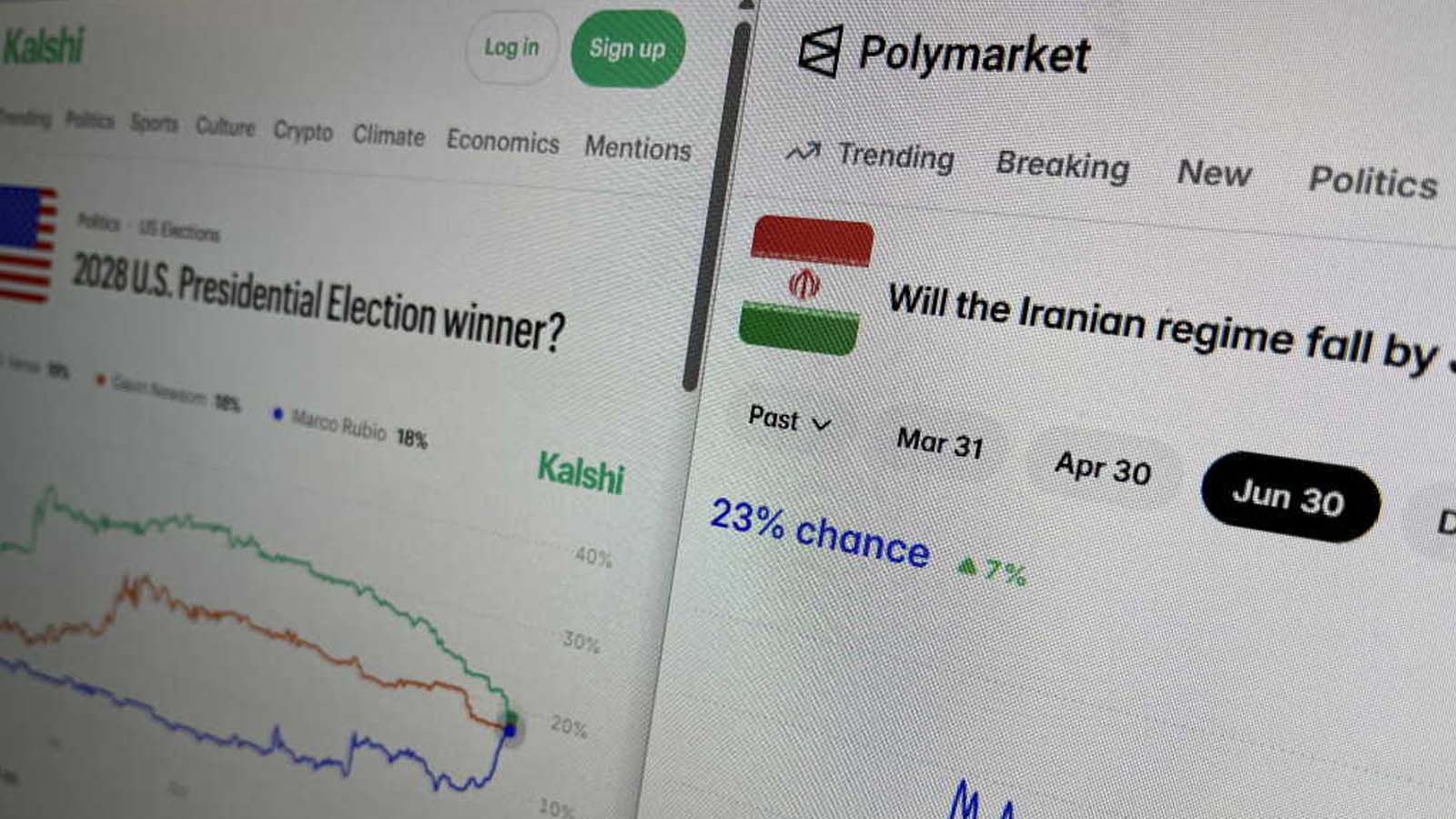
WASHINGTON – A Nov. 13 memo from House Oversight Committee staff asks Congress to weigh prediction market limits on federal workers, lawmakers and their aides, with options running from a blanket trading prohibition to a narrower bar on contracts about government decisions or political results. Either version would cover officials who hold no inside information, and the staff memo separately concludes that insider-trading statutes now on the books already govern event contracts.
Committee staff addressed the six-page memo to the panel’s Republican majority. The inquiry dates to May 22, when Chairman James Comer, R-Ky., wrote to Kalshi and Polymarket. On Sept. 29 he added Crypto.com, Hyperliquid Labs and Aristotle Exchange, the parent of PredictIt. The companies turned over close to 1,700 pages, the memo says, and their representatives, lawyers and employees gave staff of both parties five briefings.
“Congress must consider additional reforms to prevent public corruption,” Comer said in the committee’s release. Of the platforms, he said the committee is “encouraged by their efforts to prevent, detect, and report illegal activity.”
Event contracts are yes-or-no positions, the memo explains, written on sports games, the same events licensed sportsbooks handle in states with legal sports betting, and on politics, weather or even a word someone might utter in public. Derivatives fall solely under the Commodity Futures Trading Commission, the memo says, and an exchange needs the agency’s designated contract market registration before it can serve the United States.
The memo rests its conclusion about current law on two Commodity Exchange Act sections that the Stop Trading on Congressional Knowledge, or STOCK, Act amended. Under Section 4c(a)(3), nonpublic information gained on the job is off limits as a basis for swaps, options or futures trades by lawmakers, their aides, federal agency workers and the judiciary’s officers and employees. Section 4c(a)(4) extends the ban to tipping, so a covered person may not hand such information to an outsider who makes those trades or helps with them.
Two broader authorities also appear in the memo. Congress outlawed fraud and manipulation across derivatives trading in a 2010 change to the act, and a year later the CFTC adopted Rule 180.1, patterned by the agency’s own account on Rule 10b-5 of the Securities and Exchange Commission.
Both STOCK Act sections turn on a covered person’s use of nonpublic information obtained through a government post. The recommendation drops that requirement. Congress, staff wrote, should narrow which event contract markets officials may enter “regardless of whether they are trading on insider information,” and that government personnel “should be restricted, at a minimum, from trading on contracts related to government actions or political outcomes.” A limit drawn by contract type needs no showing of what an official knew.
Whichever form Congress chose, the memo says, extending it across every branch would “eliminate even the appearance” that officials profit from what they learn at work. Staff cite two precedents. The Pentagon, in a recent memo, barred troops and civilian agency personnel alike from profiting personally through prediction market platforms or nonpublic information. In the Senate, a prediction market insider trading ban adopted April 30 covers senators, officers and staff.
A second recommendation asks Congress to see that regulators and the exchanges share enough data for any such restrictions to be enforced.
On cooperation, the memo counts four companies that produced extensive records or briefed staff on the safeguards and proprietary detection technology they run. It credits the exchanges themselves with catching most of the publicly reported insider-trading cases first and referring them to law enforcement and regulators. The fifth company, Hyperliquid, answered differently. In an Oct. 13 letter from the law firm Latham & Watkins, the memo says, Hyperliquid reported that it does not “possess the types of records and information” the committee sought on how it verifies customer identities.
Polymarket is the memo’s example. Its insider-trading detection team now answers to a recent hire with a law enforcement background, the memo says, and works from PolyGraph, surveillance software developed with Chainalysis, an analytics company. The software pulls from blockchain analytics, social media, user reports and tips from law enforcement, then sends the team alerts in real time along with a daily digest.
The memo describes a company operating on two tracks. U.S. customers use Polymarket US, the trade name of New York-based QCX LLC, which holds a CFTC contract market registration. Polymarket.com, a decentralized exchange with headquarters in Panama, has no such registration and is not meant to be open to U.S. persons, though the memo says some may have slipped past its controls with VPNs and similar tools.
Cases The Memo Cites
The memo cites four matters. The Van Dyke indictment and the Spagnuolo complaint are allegations, and the Santos and Perez matters ended in CFTC orders.
| Case | Action | Amount | Platform |
|---|---|---|---|
| Gannon Ken Van Dyke, Army master sergeant | Indictment unsealed April 23, per the Justice Department, alleging use of classified information on the Maduro capture | More than $409,000 | Polymarket |
| Michele Spagnuolo, Google engineer | CFTC complaint May 27 alleging use of Google’s nonpublic search data | $1.2 million | Polymarket.com |
| George Santos, former congressman | CFTC order July 31 for manipulative trading on a State of the Union attendance contract | $35,000 | Kalshi |
| Gabriel Perez, White House teleprompter operator | CFTC order Aug. 28 over trades on presidential mention contracts | $172,000 | Kalshi |
The exchange itself spotted the trading and alerted the CFTC in the Spagnuolo, Santos and Perez matters, the memo says, and Kalshi also froze Santos’ account. The memo says Polymarket CEO Shayne Coplan confirmed the Spagnuolo referral.
Candidates who traded on races they were running in also draw a mention. Kyle Langford, a gubernatorial candidate, put $200 on his own race on Kalshi in May 2025, the memo says, and three more politicians did likewise in 2026. Sens. Elizabeth Warren, D-Mass., and John Curtis, R-Utah, cited one 2025 case and three April 2026 cases in an Oct. 28 letter on election trading safeguards to Kalshi and Polymarket.
House Democrats had asked for the investigation before Comer opened it. In a May 11 letter, Rep. Chris Pappas, D-N.H., and six fellow House Democrats pressed Comer for subpoenas and an investigation, pointing to suspicious trades timed to military action against Iran by the U.S. and Israel. Iran appears nowhere in the memo.
NBC News projects that Democrats captured the House in the Nov. 3 midterms. Rep. Robert Garcia, D-Calif., the panel’s ranking member, is in line to chair it when the new majority is seated in January, NBC reported.
