- Manfred said Harper’s activity was not a violation of the basic agreement, which permits players to appear in sportsbook ads.
- The clip reached Terry Thompson, a FanDuel VIP customer who says he lost nearly $2 million to online sportsbooks.
- Harper posted that he never consented to FanDuel using the November 2024 video he recorded through Cameo.
- Thompson has sued FanDuel, DraftKings, the NFL and data provider Genius Sports over his gambling losses.
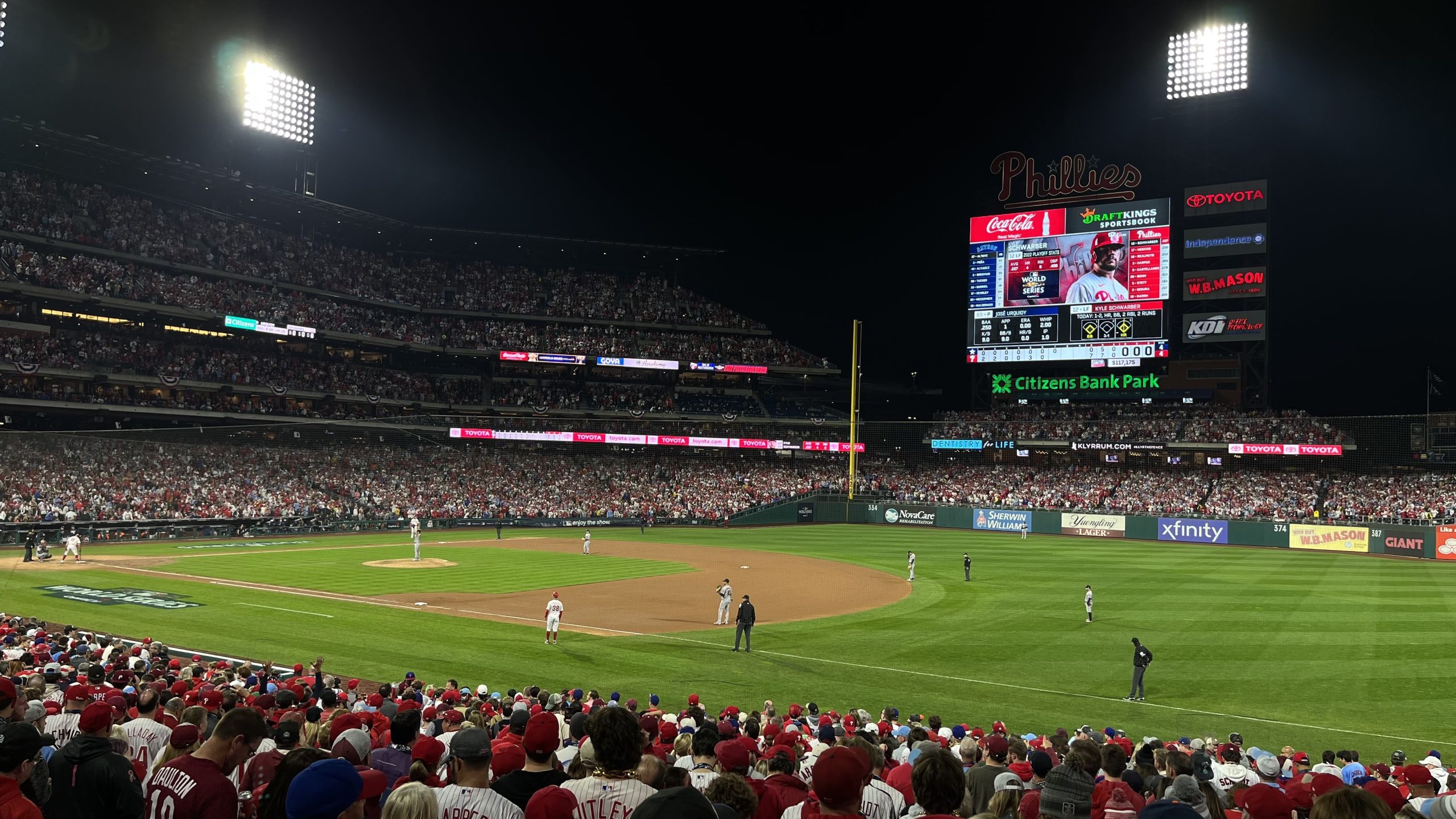
PHILADELPHIA – Commissioner Rob Manfred said Bryce Harper’s Cameo video that FanDuel repurposed as a promotion did not violate Major League Baseball’s collective bargaining agreement, addressing the matter for the first time at Citizens Bank Park on July 14.
What The Commissioner Said
Speaking to the Baseball Writers’ Association of America during All-Star week, Manfred drew a clear line on the rules question while leaving the conduct question open. “I think the important thing is that Bryce’s activity was not a violation of the basic agreement,” he told reporters, adding that the league would “continue to try to figure out exactly how we ended up where we ended up.”
He stopped short of endorsing the appearance for the legal sports betting operator itself. “I’m not really certain that I know all of the underlying facts well enough to evaluate the behavior,” Manfred said. The CBA lets players cut sportsbook ads but bars them from promoting baseball betting specifically, and the league concluded a generic Cameo greeting did not cross that line.
The Video And The Lawsuit
Harper recorded the 21-second clip in November 2024 for what he understood to be a personal greeting. It surfaced this month with a FanDuel logo, greeting Thompson and his son by name and referencing a “host” from the sportsbook. In an Instagram statement, Harper denied consenting to any commercial use, saying he would not have made it had he known FanDuel’s intent or Thompson’s circumstances.
Thompson sued in March, naming FanDuel, his VIP host, DraftKings, the NFL and Genius Sports, alleging the operators exploited his addiction with perks that pushed him to wager more.
What It Signals for the Books
Manfred’s ruling keeps a marquee player clear of discipline, but his hedge on the “underlying facts” underscores how thin the guardrails are between MLB endorsements and the operators that bankroll them. The episode echoes a tension the union already flagged when the MLBPA sought a prop ban even as it defended player collaborations with sportsbooks.
